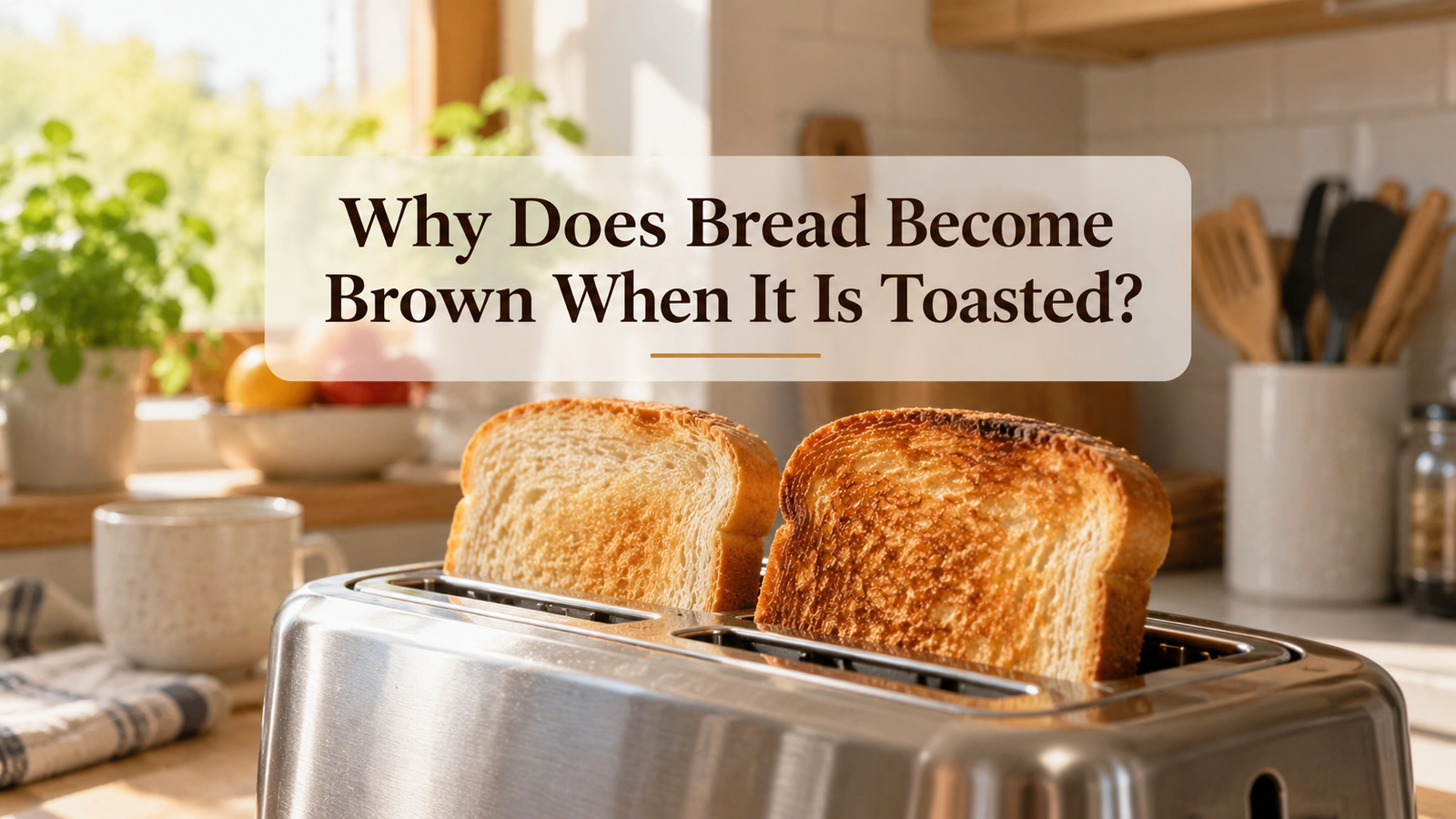
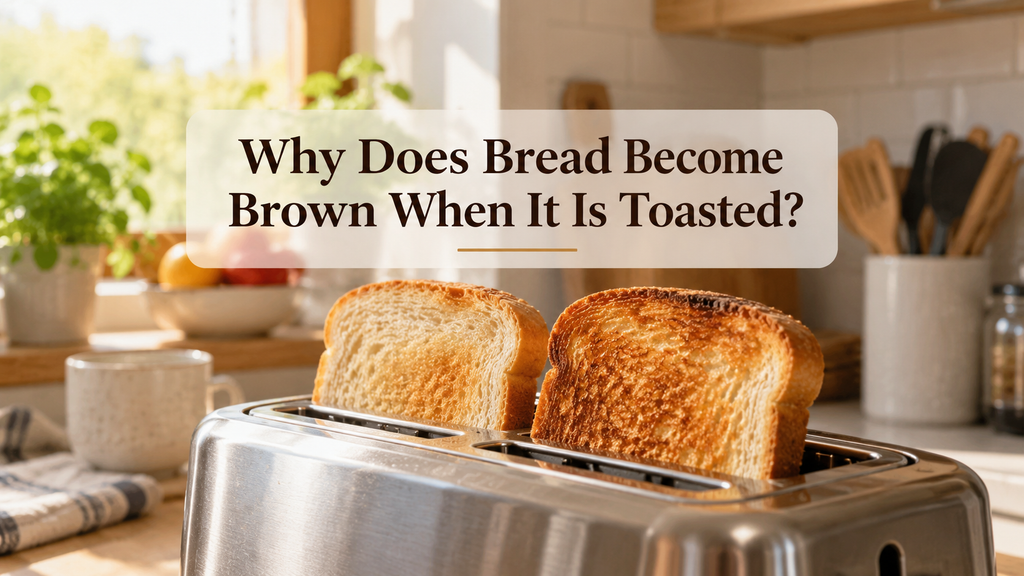
Bread is one of the most common foods eaten around the world. It can be soft, fluffy, chewy, or crispy depending on how it is prepared. One of the simplest ways to change bread is to toast it. A pale slice of bread can become golden brown, crisp, warm, and more flavorful within just a few minutes. This everyday change may look simple, but there is interesting food science happening inside the bread.
So, why does bread become brown when it is toasted?
The main reason is a chemical process called the Maillard reaction. This reaction takes place when heat causes certain sugars and proteins in bread to interact with each other. These reactions create new compounds that give toasted bread its brown color, rich aroma, and deeper flavor.
Understanding why bread becomes brown when toasted is a useful way to learn how heat changes food. The same type of reaction also helps create the color and flavor of roasted coffee, baked cookies, grilled meat, and many other cooked foods.
What Happens When Bread Is Toasted?
When a slice of bread is placed inside a toaster, its temperature begins to rise. At first, the heat mainly removes moisture from the surface of the bread. Fresh bread contains a noticeable amount of water, especially inside its soft structure.
As the bread becomes hotter, some of this moisture turns into water vapor and escapes. The surface becomes drier, which allows its temperature to rise even further.
Once the surface becomes hot enough, chemical reactions begin between the natural sugars and amino acids present in the bread. These reactions slowly change the color of the surface from pale cream to light brown and then to a deeper golden brown.
At the same time, the bread becomes crisp because less moisture remains near the surface.
This combination of moisture loss and chemical change is what turns soft bread into toast.
The Maillard Reaction Is the Main Reason
The most important process behind the browning of toasted bread is the Maillard reaction.
The Maillard reaction occurs when amino acids, which come from proteins, react with certain sugars when exposed to heat. Bread naturally contains both proteins and carbohydrates, so it has the ingredients needed for this reaction.
When the temperature becomes high enough, these ingredients begin forming many new chemical compounds.
Some of these compounds are brown pigments called melanoidins. These pigments are largely responsible for the familiar brown color of toast.
Other compounds affect the smell and taste of the bread. This is why toasted bread does not simply look different from fresh bread. It also smells warmer and tastes richer.
The Maillard reaction is not a single simple reaction. It is actually a complex collection of many chemical changes that happen at the same time.
Why Fresh Bread Is Usually Pale
Fresh bread is usually pale because its surface has not experienced intense dry heat for very long.
During baking, the inside of bread remains moist because it contains water. Water helps keep the internal temperature relatively limited while the bread is baking.
The outer crust becomes much hotter because it loses moisture more quickly. That is why the crust of baked bread is already darker than the soft interior.
When you place a slice of bread in a toaster, you expose surfaces that were originally inside the loaf. These surfaces are pale because they were protected from direct high heat during baking.
Toasting gives those surfaces another period of heating, allowing browning reactions to occur.
Heat Removes Moisture First
Moisture plays an important role in how bread browns.
Before strong browning can happen, much of the water near the bread’s surface must evaporate. Water absorbs heat and helps keep temperatures from rising too quickly.
As the surface dries, the temperature can increase enough for the Maillard reaction to become much more active.
This explains why a damp slice of bread may take longer to become brown than a dry slice.
It also explains why toast becomes crisp. As water leaves the bread, the outer structure becomes drier and firmer.
The inside may still remain slightly soft if the bread is toasted for a short time.
Sugar Helps Bread Brown
Bread contains natural sugars that can take part in browning reactions.
Some sugars are already present in flour. Others may be created during the bread making process when enzymes break down some of the starch.
Many bread recipes also contain added sugar, honey, milk, or other ingredients that can increase the amount of available sugar.
Bread with more sugar may brown more quickly in a toaster because more sugar is available for chemical reactions.
This is one reason sweet breads can become dark faster than simple white bread.
However, the exact browning speed also depends on moisture, thickness, toaster temperature, and the ingredients used in the bread.
Proteins Are Important Too
Sugar is only part of the story.
The Maillard reaction also needs amino acids, which are the building blocks of proteins.
Flour contains proteins, including the proteins that help form gluten. These proteins provide amino acids that can participate in the browning process.
When heat brings sugars and amino acids together under the right conditions, many new flavor and color compounds are produced.
This is why the chemistry of toast is more complicated than simply burning sugar.
Is Toasting the Same as Caramelization?
Toasting and caramelization are related to heat and browning, but they are not exactly the same process.
Caramelization happens when sugars are heated enough to break down and form new compounds. It does not require proteins or amino acids.
The Maillard reaction, on the other hand, involves both sugars and amino acids.
When bread is toasted, the Maillard reaction is usually the main reason for its golden brown color and toasted flavor.
Some caramelization may also occur in certain breads, especially when they contain more sugar or are heated strongly.
Both processes can contribute to flavor, but they are chemically different.
Why Does Toast Smell So Good?
The smell of toast comes from many volatile compounds created during heating.
Volatile compounds are substances that can easily enter the air. Once they leave the hot bread, they travel to your nose.
The Maillard reaction produces a large variety of aroma compounds. Some may smell nutty, roasted, sweet, or slightly smoky.
This combination creates the familiar smell associated with freshly toasted bread.
Our sense of smell also contributes strongly to taste. This is why toast often seems more flavorful even if nothing else has been added to it.
Why Does Toast Taste Different From Bread?
Fresh bread and toasted bread are made from the same basic slice, but they can taste surprisingly different.
Heating changes the chemical makeup of the bread’s surface.
New compounds formed during the Maillard reaction create deeper roasted flavors. Moisture loss also changes the texture, making the surface crisp.
Texture affects the way food feels in the mouth and can influence how we experience flavor.
Warm toast also releases aromatic compounds more easily than cold bread, which can make the flavor seem stronger.
So the difference between bread and toast comes from color, aroma, texture, temperature, and chemical changes happening together.
Why Does Bread Become Darker the Longer It Toasts?
The longer bread remains exposed to heat, the more browning reactions can occur.
At first, the bread may become lightly golden. With more time, it becomes medium brown. If heating continues, it can become dark brown and eventually black.
This happens because the chemical reactions continue as long as enough heat is supplied.
At very high temperatures or after too much heating, the bread begins to burn rather than simply brown.
Burning involves further breakdown of organic material and can produce bitter flavors and smoke.
This is why there is an important difference between well toasted bread and burnt bread.
Why Do Different Types of Bread Brown Differently?
Not every type of bread becomes brown at the same speed.
White bread, whole wheat bread, sourdough, milk bread, and sweet bread all contain different amounts of sugar, protein, fiber, moisture, and other ingredients.
Sweet breads often brown quickly because they contain added sugar.
Bread made with milk may also brown differently because milk contains proteins and lactose.
Whole grain bread may already have a darker natural color, which can make browning less obvious.
Thicker slices may take longer because they contain more moisture and require more heat.
Even two slices from the same loaf can toast slightly differently depending on their thickness and moisture level.
Why Does Toast Become Crispy?
The crisp texture of toast is mainly caused by moisture loss.
Fresh bread contains water within its soft network of starch and protein. This water helps keep the bread flexible.
During toasting, heat removes water from the surface.
As the surface dries, it becomes firmer and more brittle. That is why toasted bread makes a crunching sound when you bite it.
If toast is left in humid air for a long time, it may slowly absorb moisture again and become less crispy.
This shows how closely texture is connected with water content.
Why Does Frozen Bread Still Toast?
Frozen bread can also be toasted because the toaster supplies enough heat to melt the ice and warm the bread.
At first, some of the toaster’s energy is used to thaw the bread and evaporate extra moisture.
After the surface becomes warm and dry enough, the browning reactions begin.
Frozen bread may therefore need slightly more toasting time than bread kept at room temperature.
Once the proper surface temperature is reached, the same basic Maillard reaction can occur.
Does the Type of Toaster Matter?
The basic science is the same, but different toasters can produce different results.
Some toasters heat more strongly than others. Heating elements may also distribute heat unevenly.
A powerful toaster can brown bread quickly, while a lower temperature toaster may take longer.
Some modern toasters have settings that control the length of the heating cycle rather than the exact temperature.
The distance between the bread and the heating elements can also affect browning.
That is why a medium setting on one toaster may produce lighter or darker toast than the same setting on another machine.
Why Can One Side Become Browner Than the Other?
Uneven browning can happen if one side of the bread receives more heat.
This may be caused by the position of the heating elements, the shape of the bread, or uneven moisture within the slice.
One side may also be closer to a heating element.
Bread that is slightly curved can heat unevenly because some areas are closer to the hot surface than others.
The chemical process is still the same. The difference is simply that certain areas receive more heat and therefore experience more browning.
What Happens If Bread Gets Too Hot?
When bread becomes extremely hot, normal browning can turn into burning.
At first, the Maillard reaction creates pleasant roasted flavors. But if heating continues for too long, the bread begins to break down more severely.
The surface may turn very dark or black.
Burnt toast often tastes bitter because different compounds are formed at these higher temperatures.
It may also release smoke.
For the best flavor, bread is usually toasted only until it reaches a golden or medium brown color, depending on personal preference.
Why Is Browning Important in Cooking?
Browning is an important part of cooking because it creates flavor.
Many foods would taste much simpler if browning reactions did not occur.
The crust on bread, the surface of roasted potatoes, the color of baked cookies, roasted coffee beans, and many cooked foods depend partly on heat driven chemical reactions.
These reactions make food more aromatic and create complex flavors that are not present in the raw ingredients.
Toasting bread is one of the easiest everyday examples of this process.
The Science Behind an Everyday Breakfast
A slice of toast may seem like a very ordinary food, but it shows several important scientific ideas.
Heat causes water to evaporate.
Drying changes the texture of the bread.
Higher temperatures allow sugars and amino acids to react.
Those reactions create brown pigments and aroma compounds.
The result is a food that looks, smells, tastes, and feels different from the original slice of bread.
This transformation happens in only a few minutes, yet it involves chemistry, temperature, moisture, and food structure working together.
Final Thoughts
Bread becomes brown when it is toasted mainly because of the Maillard reaction. Heat causes sugars and amino acids in the bread to react and create new compounds. Some of these compounds produce the golden brown color, while others create the roasted aroma and richer flavor associated with toast.
Before strong browning begins, heat also removes moisture from the bread’s surface. This drying process allows the surface temperature to rise and gives toast its familiar crispy texture.
The longer the bread is heated, the darker it becomes. Light heating produces pale golden toast, while longer heating creates deeper browning. Too much heat eventually causes the bread to burn.
The next time you place bread in a toaster, you are watching a small food science experiment take place. A simple slice of bread is being transformed by heat, moisture loss, and chemical reactions into something crisp, brown, aromatic, and completely different in flavor.
That is why bread becomes brown when it is toasted, and it is a perfect example of how everyday cooking is closely connected with chemistry.