Blood is one of the most important substances in the human body. It carries oxygen to our organs, delivers nutrients to cells, fights infections, controls bleeding, and removes waste products. Since blood cells do not live forever, the human body must continuously produce new blood cells to replace the old ones.
This process happens every second of our lives. Even while we are sleeping, working, eating, or exercising, the body is quietly making millions of new blood cells.
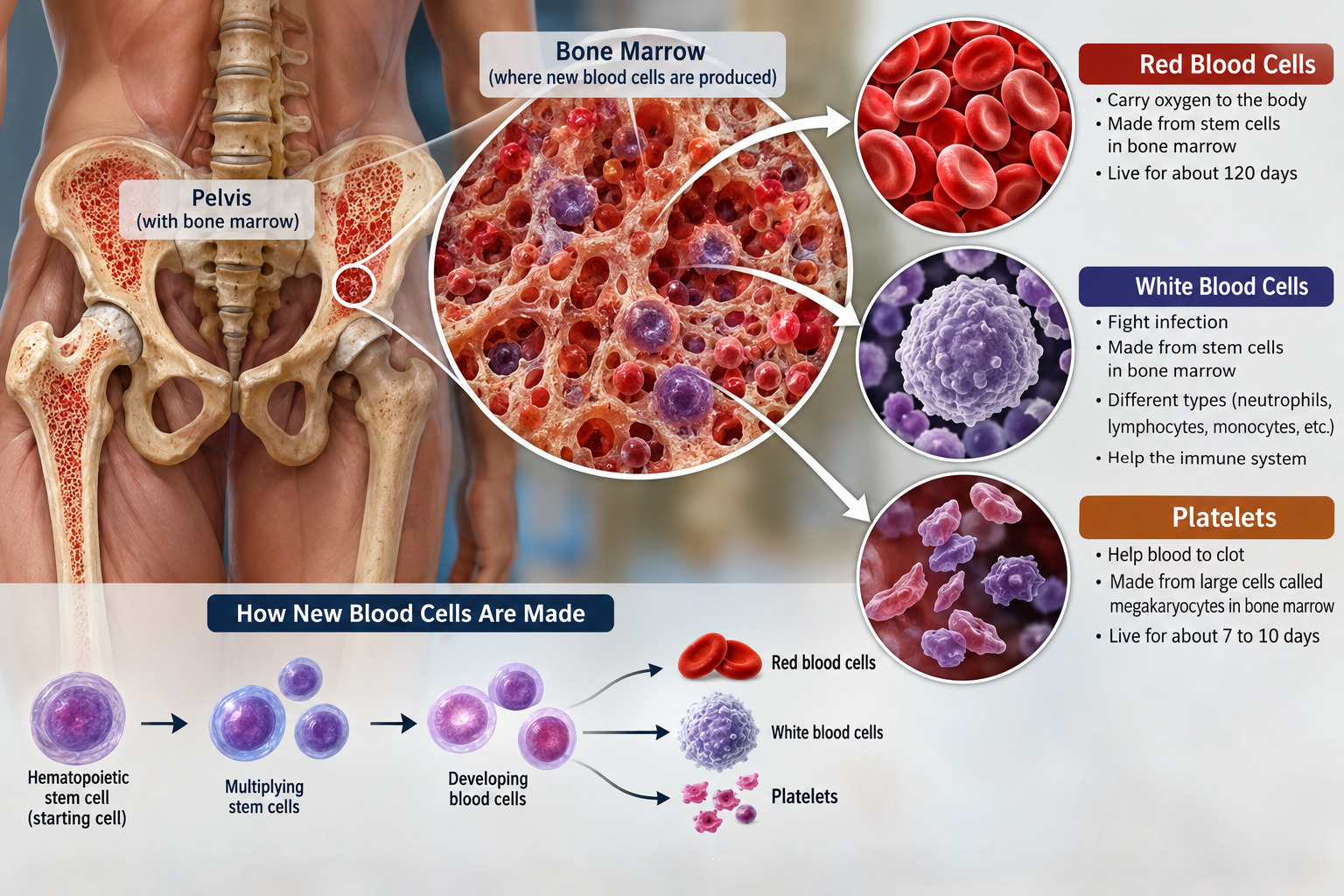
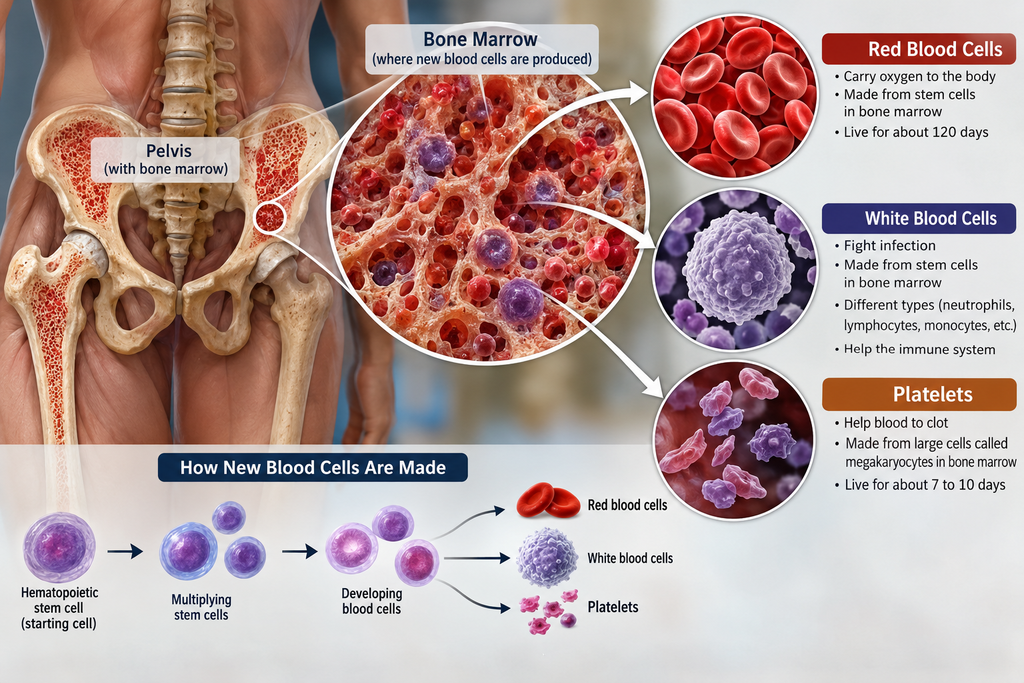
The process of producing new blood cells is called hematopoiesis. Most blood cell production takes place inside the bone marrow, which is the soft tissue found inside certain bones.
The human body produces several different types of blood cells, and each type has its own important job. These include red blood cells, white blood cells, and platelets.
Understanding how the body produces new blood cells gives us a better idea of how remarkable the human body really is.
Where Are New Blood Cells Produced?
Most new blood cells in adults are produced inside the bone marrow.
Bone marrow is a soft, sponge like tissue found inside many bones. It is especially active in bones such as the pelvis, ribs, breastbone, skull, and parts of the spine.
Many people think of bones as solid structures, but the inside of certain bones contains living tissue filled with blood vessels and specialized cells.
This bone marrow acts like a highly organized factory.
Inside this factory are special cells called hematopoietic stem cells.
These stem cells are the starting point for nearly all blood cells.
They have an unusual ability. They can make copies of themselves, and they can also develop into different types of blood cells.
This means that one type of stem cell can eventually become a red blood cell, a white blood cell, or a platelet producing cell.
The body carefully controls this process depending on what it needs.
What Are Hematopoietic Stem Cells?
Hematopoietic stem cells are sometimes called blood forming stem cells.
They are located mainly inside the bone marrow.
These cells are extremely important because they are responsible for maintaining the body’s supply of blood cells throughout life.
Stem cells have two main abilities.
The first is called self renewal.
This means the stem cells can divide and produce more stem cells. This helps maintain a permanent supply.
The second ability is called differentiation.
Differentiation means that a stem cell can change into a more specialized type of cell.
For example, a hematopoietic stem cell may develop through several stages before becoming a mature red blood cell.
Another stem cell may follow a different pathway and become a white blood cell.
The body controls these pathways using hormones, growth factors, and chemical signals.
This makes blood production highly organized rather than random.
The Main Types of Blood Cells
Human blood contains several types of cells, but the three major groups are red blood cells, white blood cells, and platelets.
Each has a completely different function.
Red Blood Cells
Red blood cells are the most common blood cells in the human body.
Their main job is to carry oxygen from the lungs to tissues throughout the body.
They also help carry carbon dioxide back toward the lungs so it can be removed when we breathe out.
Red blood cells contain a protein called hemoglobin.
Hemoglobin binds to oxygen and gives blood its red color.
A healthy adult body contains trillions of red blood cells.
However, individual red blood cells do not live forever.
Most survive for about 120 days.
After that, old or damaged red blood cells are removed mainly by the spleen and liver.
Because billions of red blood cells are removed every day, the bone marrow must constantly replace them.
How Does the Body Produce Red Blood Cells?
The production of red blood cells is called erythropoiesis.
This process begins with hematopoietic stem cells in the bone marrow.
These stem cells go through several stages of development before becoming mature red blood cells.
An important hormone involved in this process is called erythropoietin.
Erythropoietin is produced mainly by the kidneys.
The kidneys continuously monitor the amount of oxygen reaching the body’s tissues.
If oxygen levels become too low, the kidneys release more erythropoietin into the bloodstream.
This hormone travels to the bone marrow and sends a message that more red blood cells are needed.
The bone marrow then increases red blood cell production.
This is one reason the kidneys are so important for healthy blood production.
People with serious kidney disease may sometimes develop anemia because their kidneys do not produce enough erythropoietin.
Why Iron Is Important for Blood Production
Iron plays a major role in the production of red blood cells.
The body needs iron to produce hemoglobin.
Without enough iron, the body may still try to produce red blood cells, but these cells may contain less hemoglobin and may not carry oxygen efficiently.
This condition is commonly known as iron deficiency anemia.
Iron is found in foods such as meat, fish, beans, lentils, leafy green vegetables, and fortified cereals.
The body absorbs iron from food through the digestive system.
After absorption, the iron can be transported through the bloodstream and stored in places such as the liver.
When the bone marrow needs iron to make new red blood cells, the stored iron can be used.
This is why a balanced diet is important for healthy blood production.
Vitamin B12 and Folate
Iron is not the only nutrient needed to make blood cells.
Vitamin B12 and folate are also extremely important.
These vitamins help cells produce and copy DNA.
Because developing blood cells divide quickly, they need healthy DNA production.
If a person does not get enough vitamin B12 or folate, red blood cells may become unusually large and may not develop properly.
This can cause certain types of anemia.
Vitamin B12 is naturally found mostly in animal products such as meat, fish, eggs, and dairy products.
Folate is found in foods such as green vegetables, beans, citrus fruits, and fortified grains.
Together, iron, vitamin B12, and folate support healthy red blood cell production.
How Are White Blood Cells Produced?
White blood cells are another major group of blood cells produced in the bone marrow.
Their main purpose is to protect the body from infection, harmful microorganisms, and abnormal cells.
White blood cells are part of the immune system.
There are several types of white blood cells, including neutrophils, lymphocytes, monocytes, eosinophils, and basophils.
Each type performs a different role.
Some white blood cells attack bacteria.
Others produce antibodies.
Some help remove damaged cells, while others are involved in allergic reactions and inflammation.
Like red blood cells, most white blood cells begin as hematopoietic stem cells inside the bone marrow.
However, they develop along different pathways.
Chemical signals called growth factors help control this process.
When the body is fighting an infection, it may increase the production of certain white blood cells.
This is why a blood test sometimes shows a higher white blood cell count during an infection.
The bone marrow is responding to the body’s increased demand.
The Role of Lymphocytes
Lymphocytes are an important type of white blood cell.
There are two major groups called B lymphocytes and T lymphocytes.
B lymphocytes help produce antibodies.
Antibodies are proteins that recognize and help fight harmful substances such as bacteria and viruses.
T lymphocytes perform several immune functions. Some directly attack infected cells, while others help coordinate the immune response.
Although these cells begin from stem cells in the bone marrow, some continue their development in other parts of the body.
For example, many T cells mature in an organ called the thymus.
This shows that blood cell development involves several organs working together.
How Are Platelets Produced?
Platelets are another important part of the blood.
They are mainly responsible for helping the blood clot.
When a blood vessel is damaged, platelets gather at the injured area and help form a temporary plug.
This reduces blood loss while the damaged tissue begins to heal.
Platelets are unusual because they are not complete cells in the same way red blood cells and white blood cells are.
Instead, they are small fragments of very large bone marrow cells called megakaryocytes.
Megakaryocytes develop from hematopoietic stem cells.
As they mature, small pieces of their cytoplasm break off.
These pieces enter the bloodstream as platelets.
A hormone called thrombopoietin helps regulate platelet production.
Thrombopoietin is produced mainly by the liver.
When platelet levels are low, the body can increase signals that encourage the bone marrow to produce more platelets.
How Fast Does the Body Produce Blood Cells?
The speed of blood cell production is remarkable.
The human body produces millions of blood cells every second.
Red blood cells are produced especially quickly because they are so numerous.
Billions of red blood cells are created every day to replace cells that have reached the end of their lifespan.
White blood cell production can also increase very quickly when the body is fighting an infection.
Platelet production may increase after bleeding or when platelet numbers fall.
The bone marrow is therefore constantly adjusting its activity.
It does not simply produce the same number of cells every day.
It responds to the needs of the body.
How Does the Body Know When More Blood Cells Are Needed?
The body uses a feedback system to control blood production.
This means organs monitor conditions in the body and send signals when changes are required.
For red blood cells, the kidneys are especially important.
If the kidneys detect low oxygen levels, they release more erythropoietin.
This tells the bone marrow to produce more red blood cells.
For white blood cells, immune system signals become more active during infection and inflammation.
These signals tell the bone marrow that more immune cells may be needed.
Platelet production is partly controlled through thrombopoietin and the number of platelets already circulating in the blood.
This constant communication allows the body to maintain a healthy balance.
What Happens to Old Blood Cells?
Producing new blood cells is only half of the process.
The body must also remove old or damaged cells.
Red blood cells usually circulate for about 120 days.
After that, they become less flexible and are more likely to be removed by the spleen.
The spleen acts like a filter for the blood.
Macrophages in the spleen and liver break down old red blood cells.
However, the body does not simply throw everything away.
Many useful materials are recycled.
For example, iron from hemoglobin can be recovered and stored.
The body can later use this iron to produce new hemoglobin.
This recycling system makes blood production more efficient.
Can the Body Produce More Blood After Blood Loss?
Yes.
The human body can increase blood production after blood loss.
For example, if a person loses blood because of an injury or blood donation, the body begins replacing the lost components.
Plasma, which is the liquid part of blood, can be replaced relatively quickly.
Red blood cells take longer to fully replace.
As oxygen carrying capacity drops, the kidneys may release more erythropoietin.
This encourages the bone marrow to produce additional red blood cells.
The body also uses stored iron and nutrients during this process.
This is one reason people are often advised to eat a nutritious diet after donating blood.
How Exercise Affects Blood Production
Exercise can influence the body’s demand for oxygen.
During physical activity, muscles need more oxygen.
Regular endurance training may cause the body to adapt in several ways, including changes in blood volume and oxygen transport.
People who live or train at high altitudes may also experience increased red blood cell production.
At high altitude, there is less oxygen available in the air.
The kidneys detect the lower oxygen availability and produce more erythropoietin.
This can cause the bone marrow to make more red blood cells.
More red blood cells can help improve oxygen delivery.
This is a natural example of how the body adjusts blood production to environmental conditions.
What Can Reduce Blood Cell Production?
Several conditions can interfere with normal blood production.
Nutritional deficiencies are one common cause.
A lack of iron, vitamin B12, or folate can affect red blood cell production.
Certain diseases may also affect the bone marrow.
Some medications and medical treatments can reduce bone marrow activity.
For example, chemotherapy may affect rapidly dividing cells, including developing blood cells.
Certain infections and immune disorders may also interfere with blood cell production.
Kidney disease may reduce erythropoietin production, which can result in fewer red blood cells.
Liver problems may affect some proteins and hormones involved in blood formation and clotting.
Because blood production involves many organs and nutrients, several different health problems can disturb the process.
Why Bone Marrow Is So Important
Bone marrow is one of the body’s most important tissues, even though most people rarely think about it.
It produces the cells that carry oxygen, fight infection, and stop bleeding.
Without healthy bone marrow, the body cannot maintain a normal blood supply.
In some serious diseases, bone marrow may stop working properly.
Doctors may then use treatments such as medications, blood transfusions, stem cell therapy, or bone marrow transplantation depending on the condition.
A bone marrow or stem cell transplant can sometimes replace unhealthy blood forming stem cells with healthy ones.
The new stem cells can then begin producing normal blood cells.
How Blood Cells Enter the Circulation
Developing blood cells remain inside the bone marrow until they reach the correct stage of maturity.
The bone marrow contains many tiny blood vessels.
When the cells are ready, they pass into these vessels and enter the bloodstream.
They can then travel throughout the body.
Red blood cells begin transporting oxygen.
White blood cells begin supporting immune defense.
Platelets begin circulating and remain ready to respond if a blood vessel becomes damaged.
The entire system works continuously without us being aware of it.
How Long Do Different Blood Cells Live?
Different blood cells have very different lifespans.
Red blood cells usually survive for around 120 days.
Platelets generally circulate for roughly one week to ten days.
The lifespan of white blood cells varies much more.
Some white blood cells may survive for only hours or days.
Others, especially certain memory lymphocytes, may remain in the body for years.
Because these lifespans are different, the body must carefully regulate production for each type of blood cell.
Can Food Help the Body Produce Healthy Blood Cells?
A nutritious diet supports normal blood production.
Iron is essential for hemoglobin production.
Vitamin B12 and folate help with cell division and DNA formation.
Protein provides amino acids needed to build many important cellular structures.
Vitamin C can also help the body absorb certain forms of iron from plant foods.
Foods that can support healthy blood formation include meat, fish, eggs, legumes, beans, lentils, leafy green vegetables, fruits, whole grains, and fortified foods.
However, eating more of one nutrient does not always solve a blood problem.
Anemia and other blood disorders can have many causes.
A medical evaluation may be necessary if blood counts remain abnormal.
Why Blood Production Is a Continuous Process
The body never completely stops producing blood cells during healthy life.
Old cells are constantly being removed.
New cells must constantly take their place.
The process is similar to maintaining a large city.
Some workers leave while new workers arrive.
Different departments require different numbers of workers depending on what is happening.
The bone marrow manages these changing demands.
If more oxygen is needed, red blood cell production may increase.
If infection appears, certain white blood cells may be produced more rapidly.
If bleeding occurs, the body may increase platelet production.
This flexible system helps keep the internal environment stable.
Final Thoughts
The production of new blood cells is one of the most impressive processes happening inside the human body.
Most blood cells begin their lives inside the bone marrow from hematopoietic stem cells.
These stem cells can develop into red blood cells, white blood cells, and platelet producing cells.
Red blood cells carry oxygen through the body. White blood cells protect us from infections. Platelets help stop bleeding.
The kidneys, liver, bone marrow, immune system, and several hormones all work together to control blood cell production.
Important nutrients such as iron, vitamin B12, folate, and protein also support this process.
Every second, the body creates enormous numbers of new blood cells while removing old ones.
We usually never notice this activity, but it is essential for survival.
The next time you think about blood, it is worth remembering that it is not simply a liquid moving through the body. It is a constantly renewed living system, supported by one of the most carefully controlled production processes in human biology.