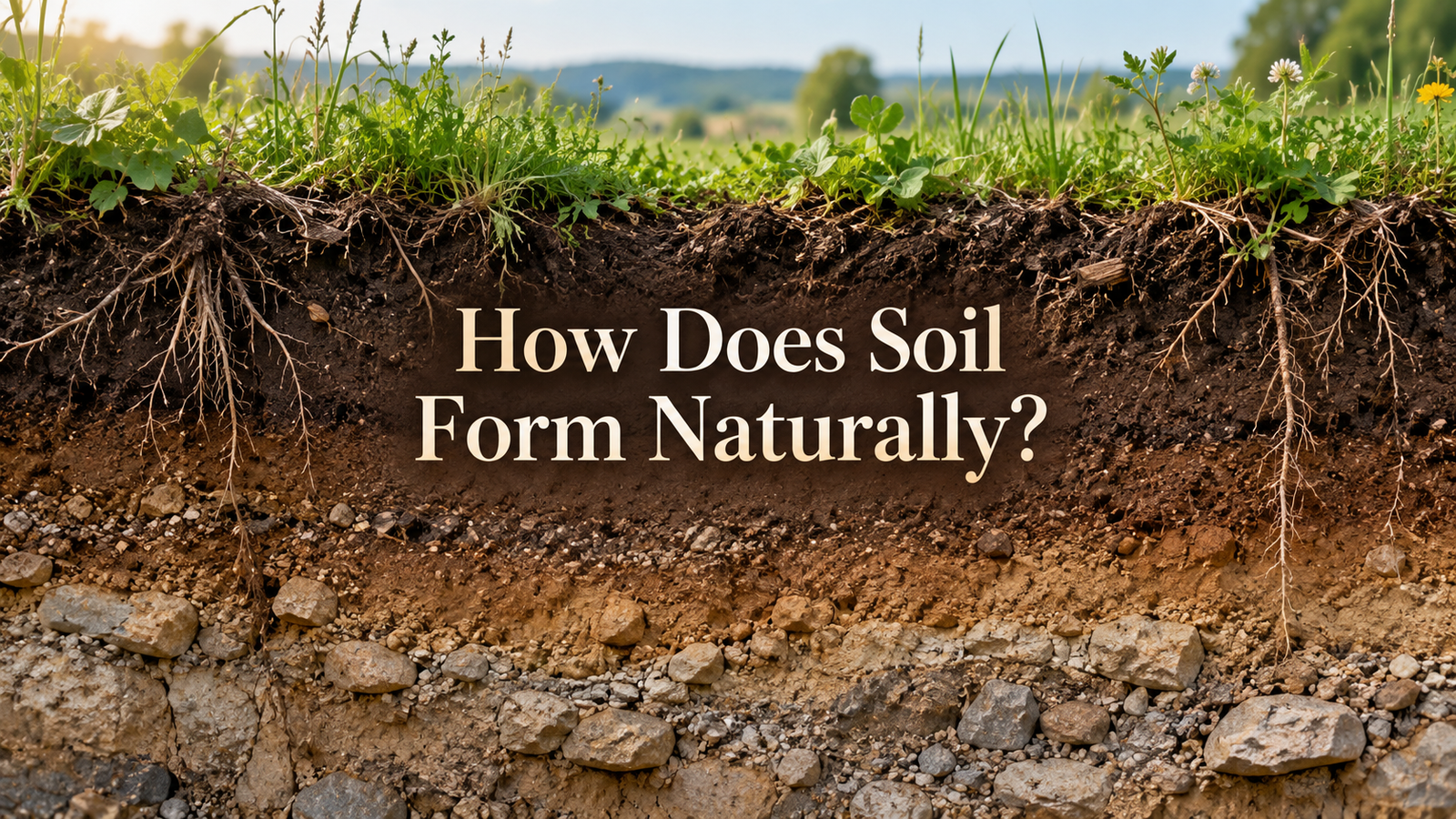
Soil is one of the most important natural resources on Earth. We walk on it, grow food in it, build on it, and depend on it in many ways. At first glance, soil may look like ordinary dirt, but it is actually a complex natural material that takes a very long time to develop. Understanding how soil forms naturally helps us appreciate why healthy soil is so valuable for plants, animals, agriculture, and the environment.
The natural process of soil formation begins with rocks. Over many years, rocks near the surface of the Earth slowly break into smaller pieces. These pieces mix with water, air, minerals, dead plants, tiny organisms, and other natural materials. Gradually, this mixture develops into the soil we see around us.
Soil does not usually form quickly. In many places, it can take hundreds or even thousands of years for a deep and mature layer of soil to develop. Climate, rock type, plants, animals, land shape, and time all influence the way soil forms.
Soil Formation Begins With Rock
The first step in natural soil formation is the breakdown of rock. Much of the soil on Earth originally came from solid rock beneath or around the ground surface.
Large rocks do not suddenly turn into soil. Instead, they are slowly broken into smaller particles through a process called weathering.
Weathering happens naturally when rocks are exposed to changes in temperature, water, wind, ice, plant roots, and chemical reactions.
As weathering continues, large rocks become smaller stones. These stones gradually break into gravel, sand, silt, and even finer mineral particles.
These mineral particles eventually become an important part of soil.
Physical Weathering Breaks Rocks Into Smaller Pieces
Physical weathering is one of the main ways rocks begin to break apart.
This type of weathering changes the size and shape of a rock without greatly changing its chemical composition.
Temperature changes can play an important role. During hot weather, some rocks expand slightly. When temperatures fall, they contract. Repeated heating and cooling can create small cracks in the rock.
Over time, these cracks may grow larger until pieces of rock break away.
Water can also cause physical weathering.
When water enters cracks in rocks and later freezes, it expands. The expanding ice pushes against the sides of the crack. After many freezing and thawing cycles, the rock can split into smaller pieces.
This process is especially common in cold or mountainous regions.
Wind also contributes to physical weathering. Sand and other particles carried by strong winds can repeatedly strike exposed rocks. Over long periods, this action can slowly wear down the rock surface.
Water Helps Shape and Break Down Rocks
Water is one of the most powerful natural forces involved in soil formation.
Rainwater falls on exposed rocks and flows across the land. Rivers and streams carry rock fragments from one place to another. As these pieces move, they rub against each other and against the riverbed.
This movement gradually makes the particles smaller and smoother.
Heavy rainfall can also wash small rock particles into lower areas where they begin to collect.
In this way, some soils form directly from the rock underneath them, while other soils develop from materials that have been transported by water.
Floodplains often contain rich soil because rivers deposit fine mineral particles in these areas.
Chemical Weathering Changes Rock Minerals
Rocks are not only broken physically. They can also change chemically.
Chemical weathering happens when minerals inside rocks react with water, oxygen, acids, or other natural substances.
Rainwater is naturally slightly acidic because it absorbs carbon dioxide from the atmosphere. When this water reaches certain rocks, it can slowly dissolve some of their minerals.
Oxygen also reacts with minerals such as iron.
This process is similar to rusting. Iron containing minerals may change color and become weaker over time.
Chemical weathering gradually changes the original rock into new mineral materials. Some of these materials become clay, which is an important part of many soils.
Warm and wet climates usually support faster chemical weathering because water and heat encourage chemical reactions.
Plant Roots Help Break Rocks Apart
Plants play an important role in natural soil formation.
Seeds can begin growing in very small cracks in rocks. As the roots become larger, they push against the sides of those cracks.
Over time, growing roots can widen the cracks and help break the rock into smaller pieces.
This is known as biological weathering because living organisms are involved.
Even small plants, grasses, mosses, and lichens can contribute to the early stages of soil formation.
Lichens are especially interesting because they can grow directly on exposed rock surfaces. They release weak natural acids that slowly help break down minerals.
As these organisms die, their remains begin adding organic material to the developing soil.
Organic Matter Becomes Part of the Soil
Mineral particles alone do not create rich soil.
Healthy soil also contains organic matter from dead plants and animals.
When leaves fall to the ground, they begin to decompose. Dead grass, roots, insects, and other natural materials also break down over time.
Tiny organisms such as bacteria and fungi help with this decomposition.
As organic materials break down, they form a dark substance called humus.
Humus is extremely important for soil quality.
It helps the soil hold water and nutrients. It also improves soil structure and creates a better environment for plant roots.
Dark, fertile soils often contain a good amount of organic matter.
Microorganisms Support Soil Development
Soil contains an enormous number of living organisms, even though most of them are too small to see without special equipment.
Bacteria, fungi, and other microorganisms live between soil particles.
They break down dead organic materials and release nutrients back into the soil.
These nutrients can then be used by growing plants.
Fungi also create networks of tiny threads in the soil. These can help connect soil particles and improve soil structure.
Microorganisms are therefore not simply living in soil. They are actively involved in creating and maintaining it.
Animals Also Help Form Soil
Many animals contribute to soil formation.
Earthworms are one of the best known examples.
As earthworms move through the soil, they create small tunnels. These tunnels allow air and water to move more easily through the ground.
Earthworms also consume organic material and soil particles. Their waste helps return nutrients to the soil.
Ants, termites, beetles, and other small animals also move soil around.
Burrowing animals can bring deeper soil to the surface and carry surface materials downward.
This constant mixing improves the structure of the soil over time.
Climate Affects How Soil Forms
Climate has a major influence on soil formation.
Temperature and rainfall affect both weathering and biological activity.
In warm and wet regions, rocks may weather quickly because water is abundant and chemical reactions happen more easily.
Plants also grow rapidly in these climates, producing large amounts of organic material.
However, heavy rainfall can sometimes wash nutrients deeper into the ground.
In dry regions, soil usually develops more slowly because there is less water available for chemical weathering and plant growth.
Cold regions may also experience slow soil formation because low temperatures reduce chemical reactions and biological activity.
However, freezing and thawing can still break rocks physically.
This is why different climates often produce very different types of soil.
The Type of Parent Material Matters
Scientists often use the term parent material to describe the original rock or sediment from which soil develops.
Different parent materials create different soils.
For example, soil formed from limestone may contain different minerals from soil formed from granite.
Volcanic ash can also produce very fertile soil because it contains many useful minerals.
The size of the original particles also matters.
Some parent materials naturally produce sandy soil, while others produce soils with more clay or silt.
The nature of the parent material strongly influences the color, texture, drainage, and mineral content of the final soil.
The Shape of the Land Influences Soil Development
The position of land also affects soil formation.
On steep hillsides, rainwater can carry soil particles downhill. This erosion often prevents deep soil from developing.
Lower areas may receive these transported particles and gradually build thicker soil.
Flat or gently sloping land often allows soil to remain in place for longer periods.
Water drainage is also important.
Soil in low areas may remain wet for long periods, while soil on slopes may drain more quickly.
These differences influence which plants can grow and how quickly organic material decomposes.
Time Is Essential for Soil Formation
Soil formation is a slow process.
A young soil may contain mostly broken rock particles and only a small amount of organic material.
As time passes, weathering continues. Plants grow and die. Microorganisms break down organic materials. Animals mix the soil. Water carries minerals through the ground.
Eventually, clear soil layers may develop.
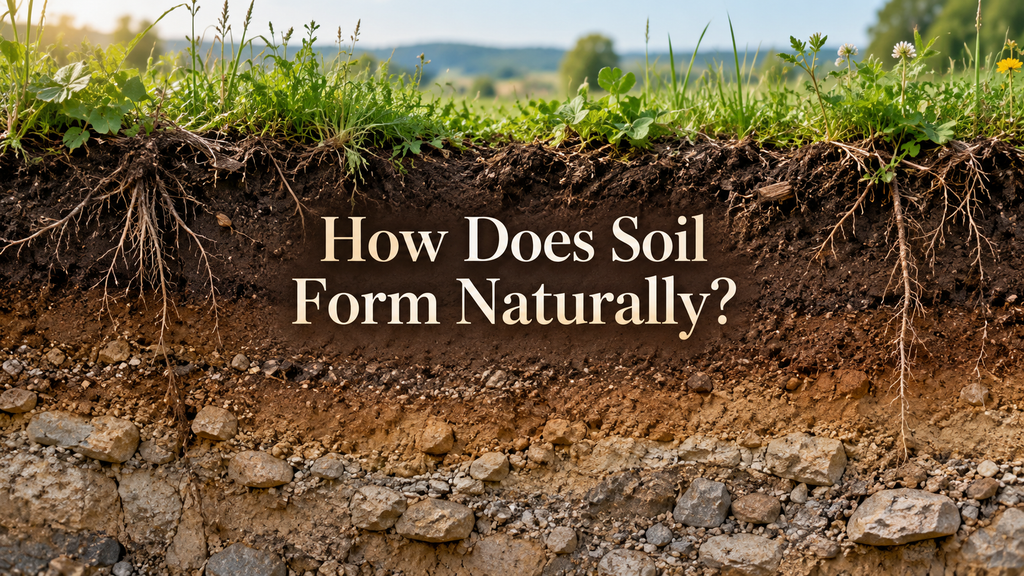
These layers are called soil horizons.
A mature soil may contain a surface layer rich in organic matter, a deeper layer where minerals collect, and lower layers containing partially weathered rock.
The development of these layers can take a very long time.
How Soil Horizons Develop
Soil is often divided into different layers based on color, texture, and composition.
The uppermost layer may contain leaves, plant remains, and other organic materials.
Below this is usually topsoil.
Topsoil is especially important because it contains many plant roots, microorganisms, nutrients, and organic matter.
Below the topsoil is subsoil.
Subsoil may contain less organic matter but more clay and minerals that have moved downward with water.
Deeper layers contain weathered parent material.
At the bottom, solid bedrock may still remain.
These layers show how soil gradually develops from the surface downward and from the rock upward.
Why Soil Texture Is Different From Place to Place
Soil is made from particles of different sizes.
Sand particles are relatively large.
Silt particles are smaller.
Clay particles are extremely small.
The amount of sand, silt, and clay determines soil texture.
Sandy soil usually drains quickly because water can move through the larger spaces between particles.
Clay soil can hold more water because its particles are very small and tightly packed.
Loamy soil contains a useful mixture of sand, silt, clay, and organic matter.
Many gardeners and farmers prefer loamy soil because it can hold nutrients and water while still allowing good drainage.
The texture of soil develops partly from the original rock and partly from weathering and transportation processes.
Soil Is Constantly Changing
Even mature soil is not completely finished.
Soil continues to change throughout its existence.
New leaves fall onto the surface. Roots grow deeper. Organisms move through the ground. Rainwater carries minerals from one layer to another.
At the same time, erosion may remove some soil.
Wind can carry dry particles away, while heavy rainfall can wash soil from exposed land.
Human activities can also influence soil, but under natural conditions, soil formation and soil loss are part of an ongoing cycle.
Healthy vegetation often helps protect the soil by covering the surface and holding particles in place with roots.
Why Natural Soil Formation Matters
Natural soil formation is essential for life on land.
Plants depend on soil for support, water, minerals, and nutrients.
Animals depend on plants directly or indirectly for food.
Humans also rely on soil for agriculture, forests, gardens, and many natural ecosystems.
Soil also stores water and helps filter it as it moves through the ground.
In addition, soil stores carbon in organic matter, making it an important part of natural environmental systems.
Because soil forms so slowly, it should be treated as a valuable resource.
A few centimeters of soil can represent many years of natural development.
Conclusion
So, how does soil form naturally?
The process begins with rocks that slowly break down through physical, chemical, and biological weathering. Water, temperature changes, wind, plant roots, and natural chemical reactions all help turn solid rock into smaller mineral particles.
At the same time, plants and animals add organic material to the ground. Microorganisms decompose this material and help create humus. Earthworms and other animals mix the soil, while rainwater moves nutrients and minerals through different layers.
Climate, parent material, living organisms, land shape, and time all influence the final type of soil that develops.
What looks like simple ground beneath our feet is actually the result of countless natural processes working together over long periods. Soil is always changing, always supporting life, and always connecting rocks, water, air, plants, animals, and microorganisms into one natural system.
Understanding how soil forms naturally makes it easier to see why protecting soil is so important. Once healthy soil is lost, nature may need hundreds or even thousands of years to build it again.