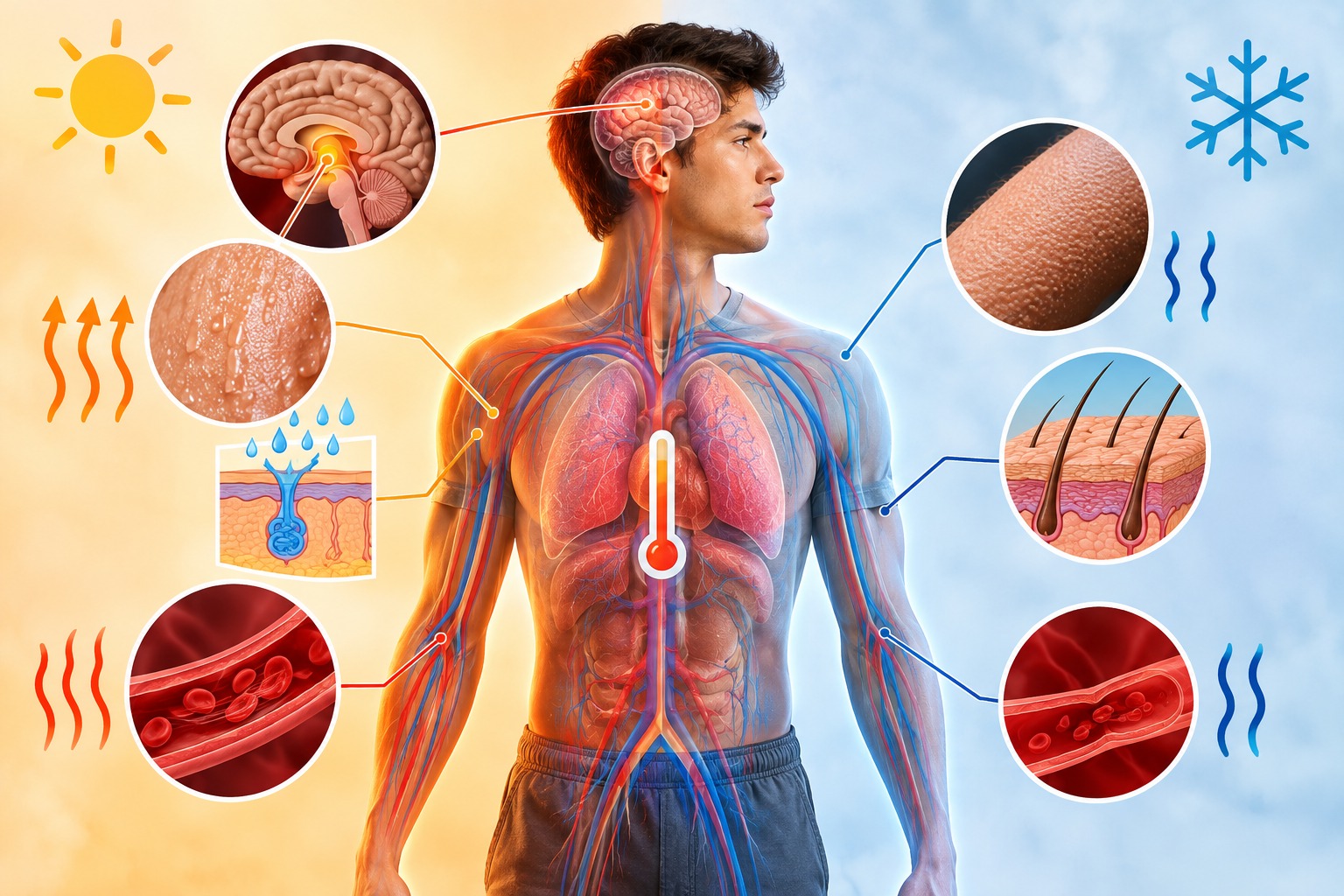
The human body has an amazing ability to keep its internal temperature within a fairly narrow range. Whether we are walking outside on a hot afternoon, sitting in a cool room, exercising, or sleeping at night, the body constantly works to maintain a suitable internal temperature. This process is known as body temperature regulation or thermoregulation.
Maintaining the right body temperature is important because almost every process inside the body depends on enzymes, cells, organs, and chemical reactions working under suitable conditions. If the body becomes too hot or too cold, these processes can become less effective and may eventually become dangerous.
So, how does the human body control its temperature?
The answer involves the brain, blood vessels, skin, muscles, sweat glands, hormones, and several automatic responses. The body’s main control center for temperature regulation is a small area of the brain called the hypothalamus. It constantly receives information about temperature and helps the body respond when conditions change.
What Is Normal Body Temperature?
Many people learn that normal human body temperature is around 37°C, or 98.6°F. However, body temperature is not exactly the same for everyone. It can naturally change during the day and can also be affected by activity, age, hormones, sleep, and the method used to measure it.
Body temperature is often slightly lower in the morning and can rise later in the day. Physical activity can also increase temperature because working muscles produce heat.
The important point is that the body does not try to keep one exact number every second. Instead, it maintains internal temperature within a suitable range.
The temperature inside the body is more important than the temperature of the skin. Your skin can feel cold or warm while the internal temperature remains relatively stable.
Why Does the Body Need to Control Its Temperature?
Temperature affects the way cells and organs function. Many chemical reactions inside the body depend on specific temperature conditions.
If the internal temperature becomes too high, proteins and enzymes can stop working normally. Very high temperatures can damage cells and organs.
If the body becomes too cold, chemical reactions and physical processes can slow down. Muscles may become stiff, thinking can become difficult, and important organs may eventually stop functioning properly.
This is why temperature regulation is an important part of human survival.
The body is constantly balancing heat production with heat loss. When the body produces more heat than it loses, temperature rises. When it loses more heat than it produces, temperature falls.
The Hypothalamus Is the Body’s Temperature Control Center
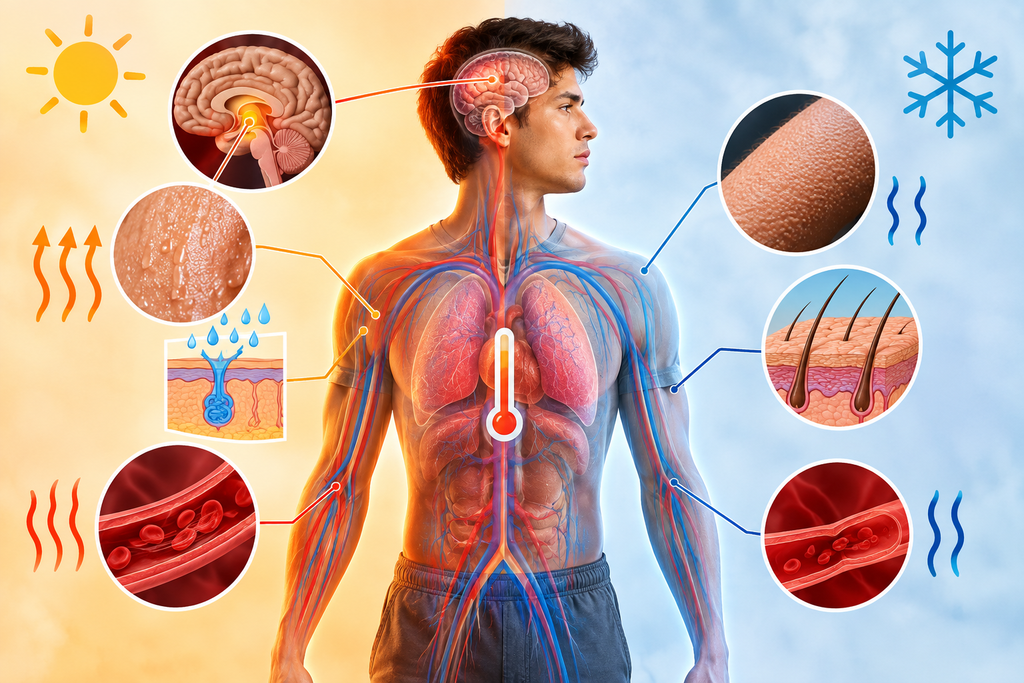
The hypothalamus is a small part of the brain that plays a major role in controlling body temperature.
You can think of the hypothalamus as a biological thermostat. A thermostat in a building monitors temperature and activates heating or cooling when necessary. The hypothalamus performs a similar function, but it does so using complex signals from the nervous system and the rest of the body.
Temperature sensors located in the skin and inside the body send information to the brain. The hypothalamus receives this information and compares it with the body’s preferred temperature range.
If the body is becoming too hot, the hypothalamus can activate processes that help remove heat.
If the body is becoming too cold, it can activate processes that help conserve or produce heat.
This response happens automatically. We do not normally have to consciously tell our bodies to sweat, shiver, or change blood flow.
How Does the Body Produce Heat?
The body produces heat as a natural result of metabolism.
Every cell needs energy to perform its functions. When the body breaks down nutrients and uses them for energy, some of that energy is released as heat.
This means that the body produces heat even when you are resting.
The liver, brain, heart, and other organs continuously produce heat. Muscles also generate significant amounts of heat, especially during physical activity.
When you exercise, your muscles work harder and require more energy. As a result, they produce more heat. This is one reason your body temperature can rise during exercise.
The body then uses several cooling mechanisms to prevent excessive temperature increases.
The Role of Blood Circulation in Temperature Control
Blood circulation is one of the body’s most useful tools for moving heat.
Blood carries heat from warmer areas of the body to other areas. The circulatory system can also change how much warm blood reaches the skin.
When the body is hot, blood vessels near the skin can widen. This process is called vasodilation.
When more blood flows close to the surface of the skin, heat can move from the body to the surrounding environment. This helps cool the body.
When the body is cold, blood vessels near the skin can become narrower. This is called vasoconstriction.
Vasoconstriction reduces blood flow near the skin and helps reduce heat loss.
This process explains why your skin may look red when you are hot and pale or cold when you are exposed to low temperatures.
How Sweating Cools the Body
Sweating is one of the best known methods of body temperature regulation.
The skin contains millions of sweat glands. When the body becomes too warm, the nervous system can stimulate these glands to produce sweat.
Sweat contains mostly water along with small amounts of salts and other substances.
The important part of sweating is what happens when the sweat reaches the surface of the skin.
As sweat evaporates, it takes heat away from the skin. This evaporation helps lower body temperature.
However, sweating does not always cool the body effectively. In very humid conditions, the air already contains a lot of moisture. This makes evaporation slower.
That is why a hot and humid day can feel particularly uncomfortable. You may sweat heavily, but the sweat may not evaporate efficiently.
This is also why drinking enough fluids is important when you are sweating heavily.
Why Do We Shiver When We Are Cold?
Shivering is another automatic temperature control mechanism.
When the body becomes cold, the hypothalamus can send signals to muscles that cause them to contract and relax rapidly.
These rapid muscle movements are called shivering.
Muscle activity produces heat. Therefore, shivering can help increase the body’s heat production.
You do not need to consciously start shivering. It happens automatically when the body detects that it needs more heat.
Shivering is useful for short term temperature control, but prolonged exposure to severe cold can overwhelm the body’s ability to maintain its temperature.
How Does the Skin Help Control Temperature?
The skin is not simply a protective covering. It also plays an important role in temperature regulation.
Temperature receptors in the skin detect changes in the surrounding environment. These receptors send information to the nervous system.
The skin also contains sweat glands and blood vessels that participate directly in cooling and warming.
When the environment is hot, increased blood flow to the skin and sweating help release heat.
When the environment is cold, reduced blood flow to the skin helps conserve heat.
The skin therefore acts as both a sensor and an important part of the body’s temperature control system.
What Happens When You Are in a Hot Environment?
Imagine that you spend time outside on a very hot day.
Your body receives information from temperature receptors in the skin. Your internal temperature may also begin to rise.
The hypothalamus detects the change and activates cooling responses.
Blood vessels near the skin widen, allowing more warm blood to reach the skin. Sweat glands become more active. Sweat reaches the surface and begins to evaporate.
You may also naturally reduce physical activity because movement produces additional heat.
Together, these responses help prevent your internal temperature from rising too much.
If the heat is extreme or if the body cannot lose heat effectively, however, temperature can continue to rise.
What Happens When You Are in a Cold Environment?
Now imagine standing outside in cold weather.
Temperature receptors detect the lower temperature. The body responds by trying to conserve and produce heat.
Blood vessels near the skin narrow. This reduces heat transfer from the warm interior of the body to the colder environment.
You may begin to shiver, which increases heat production through muscle activity.
You may also notice that your skin feels cold because blood flow near the surface has been reduced.
These responses work together to protect the body’s internal temperature.
Why Do We Get Goosebumps?
Goosebumps are another response associated with cold temperatures.
Small muscles attached to hair follicles contract, causing the hairs on the skin to stand up. This reaction is controlled by the autonomic nervous system.
In animals with thick fur, raising the hair can trap a layer of air and provide some insulation.
Humans have much less body hair, so goosebumps have little effect on keeping us warm. They are mainly considered a leftover response from our evolutionary past.
Goosebumps can also occur because of strong emotions such as fear or excitement, not only because of cold.
The Role of Hormones in Temperature Regulation
Hormones also influence body temperature.
The thyroid gland produces hormones that affect metabolism. Metabolism influences how much energy the body uses and how much heat it produces.
Other hormones can also affect temperature regulation. For example, hormonal changes can influence body temperature during different stages of life and under different physiological conditions.
This is one reason body temperature can vary between individuals and can change over time.
Hormonal changes can also contribute to changes in temperature perception.
Why Does Exercise Make You Feel Hot?
During exercise, muscles require much more energy than they do when you are resting.
As energy is produced and used, a significant amount of heat is generated.
Your body responds by increasing blood flow to the skin and producing sweat. Your heart may also beat faster so that blood can circulate efficiently.
The combination of increased blood flow and sweating helps remove excess heat.
This is why you may become red, sweaty, and warm during exercise.
After you stop exercising, your body continues working to remove the extra heat until your temperature returns toward its usual level.
How Does the Body Lose Heat?
The body can lose heat in several ways.
One method is radiation. Heat can move from the body into the surrounding environment without direct contact.
Another method is conduction. Heat can move from the body to a cooler object when the two come into contact.
For example, sitting on a cold surface can cause heat to move from your body into that surface.
Heat can also be lost through convection. Moving air can carry heat away from the skin.
Finally, evaporation removes heat when water on the skin changes into water vapor. Sweating is especially important because evaporation can provide substantial cooling.
The body uses these methods together depending on the environment.
Why Does Fever Make Body Temperature Rise?
Fever is different from simply becoming overheated.
During a fever, the hypothalamus changes the body’s temperature set point in response to signals associated with illness, often involving the immune system.
Because the set point becomes higher, the body may initially behave as if it is too cold.
A person may feel cold, develop chills, or shiver even though their temperature is already increasing.
Once the body reaches the new temperature level, the person may feel warm.
When the fever resolves and the hypothalamic set point returns toward normal, the body may respond by increasing heat loss. This can lead to sweating.
Fever is therefore a regulated change in body temperature rather than simply uncontrolled overheating.
What Is Hypothermia?
Hypothermia occurs when the body’s internal temperature falls dangerously low.
It can happen after prolonged exposure to cold conditions, especially when a person is wet, poorly protected, or unable to generate enough heat.
Early signs can include intense shivering, cold skin, tiredness, and difficulty concentrating.
As body temperature continues to fall, shivering may eventually become weaker or stop. Confusion, poor coordination, and other serious problems can occur.
Severe hypothermia is a medical emergency and requires immediate medical attention.
What Is Heat Exhaustion?
Heat exhaustion can happen when the body loses too much water and salt while trying to cool itself.
Heavy sweating, weakness, dizziness, headache, nausea, and tiredness can occur.
Moving to a cooler environment and replacing fluids can be helpful in mild cases.
However, heat related conditions can become serious if body temperature continues to rise.
What Is Heatstroke?
Heatstroke is a severe condition in which the body’s temperature regulation system becomes overwhelmed.
It can cause dangerously high body temperature and changes in mental function such as confusion or unusual behavior.
Heatstroke is a medical emergency.
A person with suspected heatstroke needs immediate medical attention and rapid cooling.
This is particularly important because severe overheating can damage the brain, heart, kidneys, and other organs.
Why Hydration Matters for Temperature Regulation
Water is essential for effective temperature regulation.
Sweating causes the body to lose water. If a person becomes significantly dehydrated, the body has less fluid available for sweating and normal circulation.
Dehydration can therefore make it harder to handle heat.
Drinking fluids regularly is particularly important during hot weather and physical activity.
The exact amount of water a person needs varies depending on factors such as climate, activity level, diet, body size, and health.
Does Body Temperature Change During Sleep?
Yes, body temperature changes naturally during sleep.
The body’s internal temperature follows a daily rhythm known as the circadian rhythm.
Temperature generally decreases during the night and reaches a lower point around the early morning hours. It then gradually rises as the day begins.
This temperature pattern is connected with the body’s sleep and wake cycle.
The environment can also affect sleep temperature. A room that is extremely hot or cold may make it harder to sleep comfortably.
Why Do Hands and Feet Often Feel Cold?
Hands and feet can feel cold because the body changes blood flow to the extremities.
When the body is trying to conserve heat, blood vessels in the hands and feet can narrow.
This helps keep more heat available for the central parts of the body.
As a result, your fingers and toes may feel colder than your chest or abdomen.
This does not necessarily mean that your internal body temperature has changed significantly.
Can Food Affect Body Temperature?
Eating requires energy, and digestion itself produces some heat.
Certain foods and drinks can also temporarily influence how warm or cool a person feels.
For example, consuming hot foods or drinks can create a feeling of warmth. Spicy foods may also cause sweating in some people.
However, the body still regulates its internal temperature through the same basic systems involving the brain, blood circulation, sweating, and metabolism.
How Does Clothing Help Temperature Regulation?
Clothing does not directly control internal body temperature in the same way the hypothalamus does, but it can help the body manage heat loss.
In cold weather, clothing provides insulation and reduces heat transfer from the body to the environment.
In hot weather, lightweight and breathable clothing can allow air movement and help sweat evaporate.
The choice of clothing becomes particularly important during extreme weather conditions.
Why Temperature Regulation Is Important for Survival
Human beings live in many different climates, from extremely cold regions to very hot environments.
Our ability to regulate internal temperature allows us to remain active across a wide range of environmental conditions.
The body constantly receives information, processes it through the nervous system, and adjusts its responses.
This happens without conscious effort most of the time.
When you are cold, your body can conserve heat and increase heat production.
When you are hot, it can increase blood flow to the skin and produce sweat.
These mechanisms demonstrate how closely different parts of the human body work together.
Final Thoughts
So, how does the human body control its temperature?
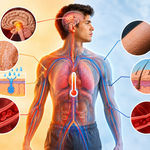
The body uses a coordinated system involving the hypothalamus, nervous system, skin, blood vessels, sweat glands, muscles, hormones, and metabolism.
The hypothalamus acts as the main control center. It receives information about temperature and helps organize the appropriate response.
When the body becomes too hot, sweating and increased blood flow to the skin help remove heat. When the body becomes too cold, blood vessels narrow and muscles may shiver to conserve and produce heat.
Body temperature regulation is a continuous process. It happens while we are awake, exercising, eating, working, and sleeping.
This natural system is one of the many reasons the human body is so remarkable. Even when the outside temperature changes dramatically, the body works constantly to protect the stable internal environment that our cells and organs need to function properly.
Understanding human body temperature regulation also helps explain why hydration, appropriate clothing, rest, and protection from extreme temperatures are important parts of everyday health. The body’s temperature control system is powerful, but it has limits. Taking sensible steps during very hot or very cold conditions can help support this essential biological process.