

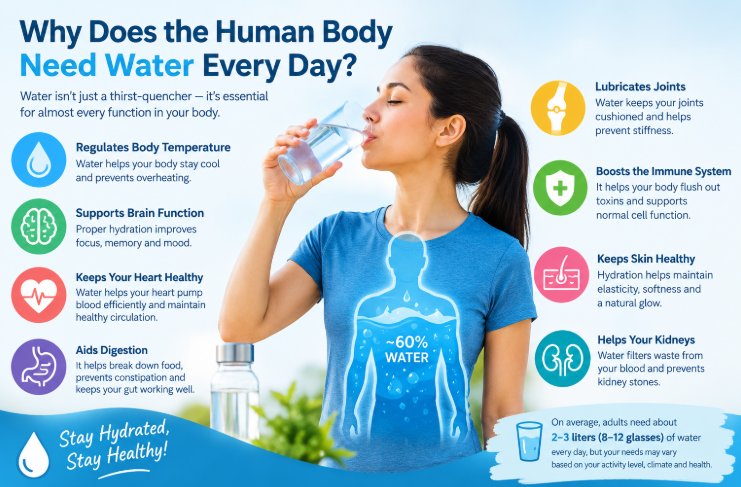
Water is one of the most important things the human body needs every day. We can live for a much longer time without food than we can without water. This simple fact shows how important hydration is for normal life. Water is involved in almost every major process that takes place inside the body. It helps control body temperature, supports digestion, carries nutrients, removes waste, protects tissues, and keeps many organs working properly.
Many people think about drinking water only when they feel thirsty. However, the body loses water throughout the day through urine, sweat, breathing, and bowel movements. Because of this continuous loss, we need to replace fluids regularly.
Understanding why the human body needs water every day can make it easier to develop healthy hydration habits. Drinking enough fluids does not have to be complicated. Paying attention to thirst, choosing water regularly, and increasing fluid intake when the body needs more can support normal hydration.
What Does Water Do in the Human Body?
Water makes up a large part of the human body. It is found inside cells, in the bloodstream, and around tissues. It provides a medium in which many chemical reactions can happen.
Water also helps transport substances around the body. Blood contains a large amount of water, allowing it to carry oxygen, nutrients, hormones, and other substances to different parts of the body.
At the same time, water helps carry waste products away from cells. The kidneys then filter the blood and remove many unwanted substances through urine.
Without enough water, these processes can become more difficult. This is why maintaining normal hydration is important for everyday health.
Water Helps Maintain Body Temperature
One of the most important functions of water is helping the body control its temperature.
The human body produces heat during normal activities. Exercise, physical work, hot weather, and even digestion can increase heat production. The body needs ways to release this extra heat.
Sweating is one of the main ways the body cools itself. When sweat reaches the surface of the skin, it can evaporate and remove heat from the body. Water is therefore an essential part of this natural cooling process.
People can lose more water through sweating during hot weather or physical activity. If this lost fluid is not replaced, dehydration can develop.
This is why drinking fluids becomes especially important when spending time outdoors, exercising, or working in a warm environment.
Water Supports Digestion
Water also plays an important role in digestion. The digestive system needs fluids to break down food and move it through the digestive tract.
Food contains different nutrients that need to be processed before the body can use them. Water supports several stages of this process.
Adequate fluid intake can also help keep stool softer. When a person does not consume enough fluids, stool may become harder and more difficult to pass.
Drinking water throughout the day is therefore one simple part of supporting normal digestive function. Water is not a treatment for every digestive problem, but maintaining proper hydration helps the digestive system perform its normal functions.
Water Helps the Kidneys Remove Waste
The kidneys are responsible for filtering the blood and helping maintain the body’s fluid and mineral balance. Water is essential for the kidneys to produce urine.
Urine allows the body to remove many waste products and substances that are present in excess. When the body has enough fluid, the kidneys can perform this important function as part of normal body regulation.
Urine color can sometimes provide a useful general clue about hydration. Pale yellow urine is commonly associated with adequate hydration, while darker urine can occur when the body needs more fluid. However, urine color can also be affected by foods, medicines, supplements, and other factors.
The best approach is to consider thirst, fluid intake, urine, weather, activity, and other circumstances together rather than relying on one sign alone.
Water Helps Transport Nutrients
Every cell in the body needs nutrients to function. These nutrients come from food and must be transported through the body.
Because blood contains a significant amount of water, hydration supports normal blood circulation and transportation of nutrients and oxygen.
Water also helps transport hormones and other substances involved in communication between different parts of the body.
This is another reason water is not simply a drink that satisfies thirst. It is part of the body’s internal transportation system.
Water Supports Healthy Joints and Tissues
Water is also present in many body tissues. It helps maintain the normal structure and function of tissues and organs.
Body fluids help lubricate and cushion certain areas. For example, fluid around joints contributes to normal movement. Water also forms part of protective fluids around sensitive tissues.
The body is constantly maintaining these fluids. Regular water intake helps provide the fluid needed for these normal processes.
It is important to understand that drinking extra water does not automatically prevent every joint problem. However, adequate hydration is one part of maintaining normal body function.
Water and the Brain
The brain is also highly dependent on water. Even mild fluid loss can affect how a person feels and functions.
When someone becomes dehydrated, they may experience symptoms such as thirst, dry mouth, tiredness, headache, dizziness, or difficulty concentrating. The severity of symptoms depends on how much fluid has been lost and the person’s circumstances.
Adequate hydration supports normal brain function and helps the body maintain its internal balance.
This can be particularly important during hot weather, exercise, long periods of physical activity, or situations where a person forgets to drink.
Why Does the Body Lose Water Every Day?
The body does not store an unlimited supply of water for future needs. Fluid is continuously lost through normal body functions.
One major route is urination. The kidneys remove excess water and waste products through urine.
Water is also lost through sweating. The amount varies according to temperature, activity level, clothing, and individual differences.
The body loses a small amount of water through breathing as well. Water vapor leaves the body every time we breathe out.
Some water is also lost through bowel movements.
Because these losses happen every day, the body needs a regular supply of fluids. Food also provides some water, but beverages are another major source.
How Much Water Does a Person Need?
There is no single amount of water that every person must drink each day. Fluid needs vary from one person to another.
Age, body size, physical activity, climate, diet, pregnancy, breastfeeding, illness, and other factors can influence fluid requirements.
A person who spends several hours exercising outdoors in hot weather may need considerably more fluid than someone who spends most of the day in a cool indoor environment.
This is why simple rules such as drinking exactly a fixed number of glasses every day may not work equally well for everyone.
A better approach is to drink regularly throughout the day and pay attention to the body’s signals. Thirst can be useful, although relying entirely on thirst may not always be appropriate in every situation, particularly for some older adults or people with certain health conditions.
Signs That You May Need More Fluids
The body provides several signals when fluid intake is not keeping up with losses.
Common signs can include:
• Thirst
• Dry mouth
• Darker urine
• Tiredness
• Headache
• Dizziness
• Reduced urination
These signs can have other causes as well, so they should not automatically be blamed on dehydration.
More serious dehydration can cause confusion, extreme weakness, fainting, or other concerning symptoms. Severe symptoms require prompt medical attention.
Water Needs Increase During Exercise
Physical activity can increase the body’s need for fluids because sweating causes water loss.
A person exercising for a short period in a comfortable environment may simply need to drink according to thirst. Longer or more intense activity, especially in hot conditions, can result in greater fluid loss.
Drinking before activity can help a person begin exercise normally hydrated. During longer activity, regular fluid intake may be useful. After exercise, replacing fluids lost through sweating is also important.
People who exercise heavily or for long periods may have additional electrolyte needs. The appropriate approach can depend on the activity, weather, sweat losses, and individual circumstances.
Hot Weather and Hydration
Hot weather can increase water loss through sweating. People who live in warm climates or spend time outside may therefore need to pay closer attention to fluid intake.
It is useful to drink regularly rather than waiting until extreme thirst develops.
During very hot conditions, people should also take sensible precautions such as spending time in shade, wearing suitable clothing, and avoiding unnecessary strenuous activity during the hottest part of the day.
Hydration is only one part of protecting the body from excessive heat.
Do Other Drinks Count as Fluids?
Water is an excellent choice for hydration, but it is not the only source of fluids. Milk, tea, coffee, soups, and many foods contain water.
Fruits and vegetables can also contribute to daily fluid intake because many of them contain a high percentage of water.
However, different beverages can have different nutritional effects. Sugary drinks can add significant amounts of sugar and calories. Water is often a simple choice when a person wants hydration without added sugar.
The main goal is to maintain adequate fluid intake while choosing beverages that fit overall nutritional needs.
Is It Possible to Drink Too Much Water?
Yes. Although dehydration is a common concern, consuming an excessive amount of water can also be dangerous.
Drinking very large quantities of water in a short period can dilute the sodium concentration in the blood. This condition is called hyponatremia and can become serious.
For this reason, more water is not always better. The goal is appropriate hydration, not drinking as much water as possible.
People with certain medical conditions, including some kidney, heart, or liver conditions, may have specific fluid recommendations from their healthcare professionals. Such advice should take priority over general hydration guidelines.
Simple Ways to Drink More Water
People who often forget to drink water can use simple habits to make hydration easier.
Start the day with a glass of water if it feels comfortable. Keep water available during work or study. Drink with meals and consider having water when taking normal breaks.
Carrying a reusable water bottle can also make water easier to access throughout the day.
Some people prefer cold water, while others enjoy room temperature water. The best choice is often the one that encourages regular drinking.
Adding natural flavors such as slices of lemon, cucumber, or fruit can make plain water more appealing without requiring sugary ingredients.
Water and Healthy Daily Habits
Hydration works best as part of an overall healthy lifestyle.
A balanced diet provides water as well as important nutrients. Regular physical activity supports general health. Adequate sleep and sensible habits also contribute to wellbeing.
Instead of treating water as a separate health task, it can become part of normal daily routines.
For example, a person can drink water with breakfast, keep a bottle nearby during work, drink with lunch, have fluids during physical activity, and drink with dinner.
Small habits are often easier to maintain than complicated routines.
Does Drinking Water Improve Skin?
Water is sometimes promoted as a simple solution for improving skin. The reality is more balanced.
The skin needs adequate hydration to function normally, and severe dehydration can affect the body’s tissues. However, drinking excessive amounts of water does not guarantee clear or youthful skin.
Skin health is influenced by many factors, including genetics, sun exposure, nutrition, sleep, skincare habits, and environmental conditions.
Adequate hydration is useful, but it should not be presented as a cure for skin conditions.
Why Water Is Better Than Many Sugary Drinks
Water provides hydration without added sugar or calories. This makes it a useful everyday beverage.
Sugary beverages can be enjoyed by some people, but frequent consumption can increase overall sugar and calorie intake. Choosing water more often can be a simple way to reduce unnecessary added sugar.
This does not mean that every other beverage must be avoided. The overall diet and drinking pattern matter more than one individual choice.
For everyday hydration, plain water remains a simple and practical option.
Tips for Maintaining Daily Hydration
A few practical habits can make it easier to maintain normal hydration.
Keep water where you can easily see it. Drink regularly rather than waiting until you are extremely thirsty. Increase attention to fluids during hot weather and exercise. Include water rich foods such as fruits and vegetables in your diet.
It can also help to notice your body’s response. If you are frequently thirsty or your urine is consistently darker than usual, consider whether you are drinking enough.
People taking medications or managing medical conditions should follow their healthcare professional’s advice about fluid intake.
Final Thoughts
Water is essential because the human body depends on it for many basic functions. It helps regulate temperature, supports digestion, allows the kidneys to remove waste, transports nutrients, supports circulation, and contributes to the normal function of cells and tissues.
The body loses water every day through urine, sweat, breathing, and bowel movements, so fluids need to be replaced regularly. How much water a person needs can vary according to activity, weather, diet, age, body size, and other factors.
The best hydration habit is not necessarily about following a strict number. It is about drinking fluids regularly, paying attention to thirst and other signs, and increasing intake when circumstances increase fluid loss.
For most people, water is a simple and practical everyday choice. By making hydration part of normal routines, we can support one of the most basic requirements of a healthy and properly functioning body.