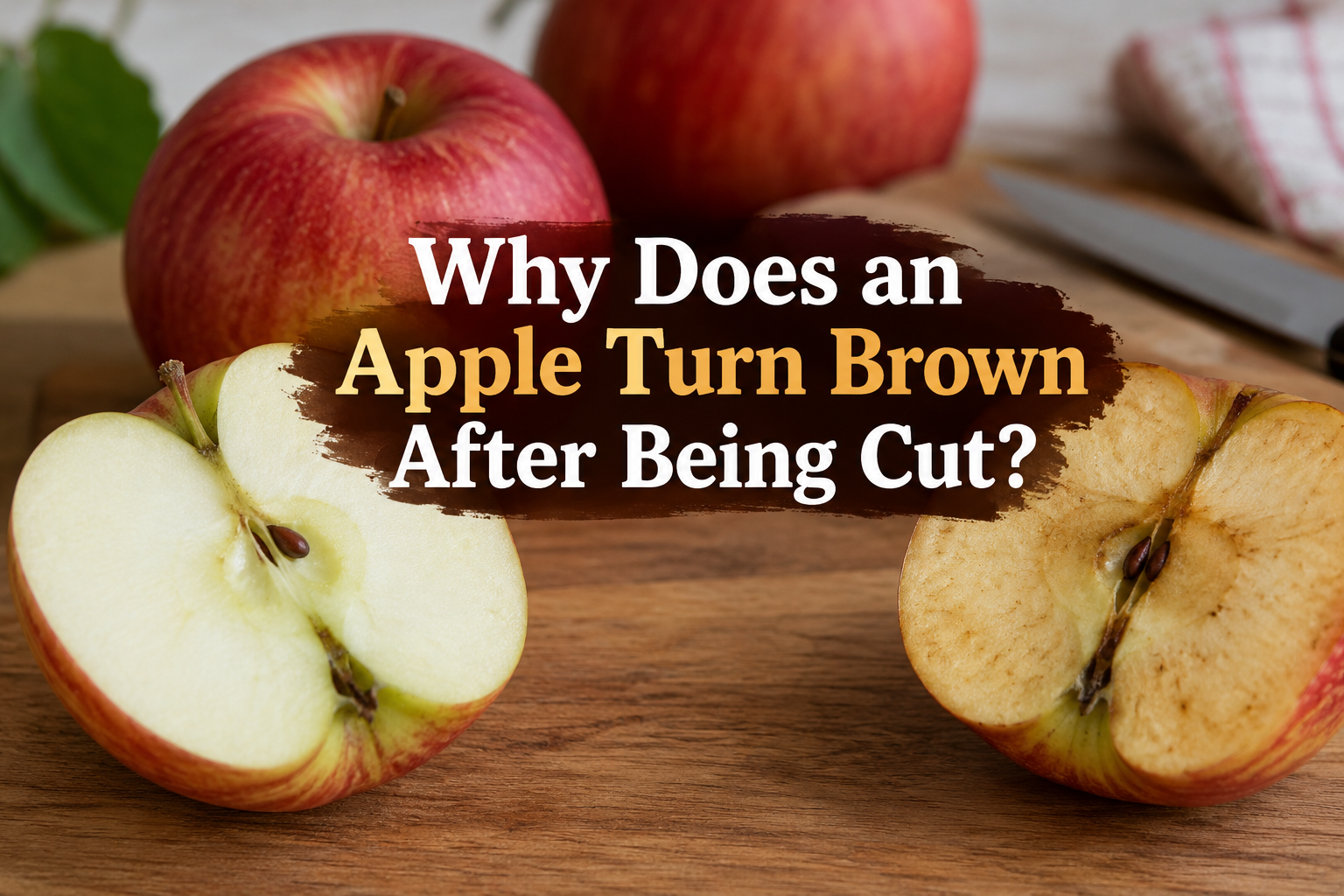
Have you ever sliced a fresh apple and noticed that the white or pale flesh slowly starts turning brown? It can happen surprisingly quickly. One moment the apple looks fresh and crisp, and a short time later the cut surface begins to change color. This simple everyday change is actually the result of an interesting chemical reaction taking place inside the fruit.
Understanding why an apple turns brown after being cut helps us learn more about chemistry, food science, plant cells, and the natural processes happening in fruits. The browning does not usually mean that the apple has immediately spoiled. Instead, it is mainly caused by a reaction between certain substances inside the apple and oxygen in the air.
What Happens When an Apple Is Cut?
An apple may look like one solid object, but it is made of millions of tiny plant cells. These cells contain water, sugars, vitamins, natural acids, enzymes, and many other substances.
As long as the apple remains whole, many of these substances stay separated inside different parts of the cells. The apple skin also acts as a protective covering that helps keep the inside of the fruit away from direct contact with the surrounding air.
When we cut an apple with a knife, we break open thousands of these cells.
Once the cells are damaged, substances that were previously separated can mix together. At the same time, oxygen from the air reaches the exposed apple flesh.
This combination starts the process that causes the apple to turn brown.
The Main Cause Is Enzymatic Browning
The scientific process responsible for most of the color change is known as enzymatic browning.
An enzyme is a type of protein that helps chemical reactions happen more easily and quickly. Apples naturally contain an enzyme called polyphenol oxidase.
Polyphenol oxidase is often shortened to PPO.
Apples also contain natural plant compounds called polyphenols. When the apple remains uncut, the enzyme and many of these compounds are kept in different areas of the cells.
Cutting the apple damages the cell structure. The enzyme, the polyphenols, and oxygen can then come into contact with one another.
Polyphenol oxidase helps oxygen react with the polyphenols. This produces new compounds that eventually form brown colored pigments.
These pigments are responsible for the familiar brown surface we see on a sliced apple.
Why Is Oxygen So Important?
Oxygen plays a major role in apple browning.
When an apple is whole, the skin limits the amount of oxygen that reaches the inner flesh. But once the apple is cut, the inside becomes directly exposed to the surrounding air.
Oxygen molecules quickly reach the damaged cells.
The polyphenol oxidase enzyme uses this oxygen during the chemical reaction. Without enough oxygen, the browning process becomes much slower.
This is why methods that reduce the apple’s contact with air can help keep it looking fresh for longer.
For example, placing apple slices in an airtight container can sometimes slow browning compared with leaving them uncovered on a plate.
Why Does the Apple Become Brown Instead of Another Color?
The brown color develops because the chemical reactions inside the apple create dark pigments.
The reaction does not produce the final brown color instantly. Several chemical changes happen first.
When polyphenols react with oxygen with the help of polyphenol oxidase, compounds called quinones are formed.
Quinones are highly reactive substances. They can react with one another and with other compounds in the apple.
Eventually, larger colored molecules are formed. These substances create brown pigments that collect on the exposed surface.
The result is the brown appearance that becomes more noticeable as time passes.
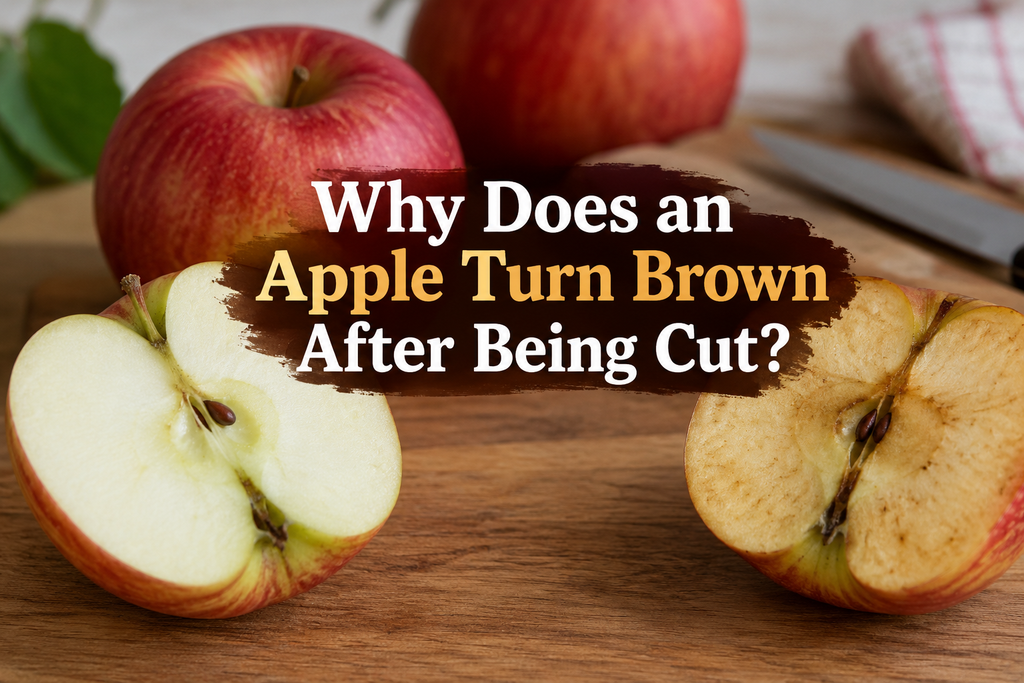
Does a Brown Apple Mean It Is Rotten?
Not necessarily.
A freshly cut apple that turns slightly brown is usually still safe to eat. The browning reaction is mainly a chemical change in the exposed surface.
It is different from food spoilage caused by harmful microorganisms.
However, an apple that has been left out for a long time may eventually begin to spoil. Signs of spoilage can include an unpleasant smell, unusual softness, mold, leaking liquid, or a strange taste.
Simple surface browning shortly after cutting is normally not the same thing as spoilage.
In fact, the apple may still taste almost the same even after some browning has occurred.
Why Do Some Apples Turn Brown Faster Than Others?
Not every apple variety browns at exactly the same speed.
Different varieties contain different amounts of polyphenols, enzymes, acids, sugars, and water. These differences can affect how quickly the browning reaction takes place.
Some apples may begin turning brown within minutes, while others stay lighter for a longer period.
The age and freshness of the apple can also influence the process.
Storage conditions matter as well. Temperature, humidity, and exposure to air can all affect how quickly chemical reactions occur.
Even two apples of the same variety may brown at slightly different rates depending on how they were grown, stored, and handled.
Why Does Lemon Juice Stop Apples From Turning Brown?
Lemon juice is one of the most common ways to slow apple browning.
There are two main reasons it works.
First, lemon juice is acidic. Polyphenol oxidase does not work as efficiently in strongly acidic conditions.
When lemon juice is placed on the apple surface, the lower pH reduces the activity of the enzyme.
Second, lemon juice contains vitamin C, also known as ascorbic acid.
Vitamin C acts as an antioxidant. It can react with some of the compounds involved in the browning process and delay the formation of brown pigments.
This is why lightly coating apple slices with lemon juice can help them stay fresh looking for longer.
The effect does not last forever, but it can significantly slow the color change.
Can Salt Water Prevent Apple Browning?
A mild salt water solution can also slow browning.
Salt can interfere with the activity of polyphenol oxidase and reduce the speed of the reaction.
Some people soak freshly cut apple slices in lightly salted water for a short time. After soaking, the slices can be rinsed with clean water.
If the salt concentration is mild, the apple usually does not develop a strong salty taste.
This method is often useful when preparing apple slices in advance.
Does Cold Temperature Slow Browning?
Yes, colder temperatures can slow the browning process.
Enzymes usually work more slowly at low temperatures. When apple slices are placed in a refrigerator, the activity of polyphenol oxidase decreases.
Other chemical reactions also slow down.
This is one reason refrigerated apple slices usually stay fresh looking longer than slices left in a warm room.
However, refrigeration does not completely stop browning. Oxygen is still present, and the enzyme can still work slowly.
Combining refrigeration with lemon juice or an airtight container can provide better results.
Can Water Help Prevent Browning?
Placing apple slices under water can reduce their exposure to oxygen.
Because oxygen from the air cannot reach the apple surface as easily, the browning reaction slows down.
However, leaving apple slices in plain water for too long may slightly affect their texture and flavor.
For short periods, water can be a simple way to delay browning.
Some people also add a small amount of lemon juice to the water for better protection.
Why Does Heating Slow Enzymatic Browning?
Heat can change the structure of enzymes.
Because enzymes are proteins, high temperatures can cause them to lose their normal shape. This process is called denaturation.
Once the polyphenol oxidase enzyme has been damaged by enough heat, it can no longer perform its job properly.
This is one reason cooked apples behave differently from fresh apple slices.
Heating apples during cooking can reduce the enzyme activity responsible for browning.
However, heating also changes the apple’s texture and flavor, so it is not usually used when we want fresh, crisp apple slices.
Is Apple Browning a Natural Defense Mechanism?
Scientists believe that enzymatic browning may have useful functions for plants.
When plant tissue is damaged, the chemical reactions involved in browning can produce compounds that may make the damaged area less attractive to certain insects or microorganisms.
The brown pigments may also help protect injured plant tissue.
In this sense, the browning reaction is not simply an unwanted change for humans. It is part of the plant’s natural chemistry.
Many fruits and vegetables use similar chemical reactions when their tissues are damaged.
What Other Foods Turn Brown After Cutting?
Apples are not the only foods that experience enzymatic browning.
Bananas often develop brown areas after being peeled or damaged.
Pears can become brown after slicing.
Avocados quickly develop darker surfaces when exposed to air.
Potatoes can also discolor after they are peeled or cut.
Eggplants, peaches, and some mushrooms can show similar changes.
Although the exact chemistry may vary slightly between foods, enzymes and oxygen are often involved.
Why Does Browning Matter in the Food Industry?
Apple browning is more than a simple kitchen curiosity. It is an important issue for food producers.
Companies that sell fresh cut fruit want the product to look appealing for as long as possible.
Consumers often associate bright, fresh colors with quality.
A brown apple slice may still be perfectly edible, but some people may think it looks old or spoiled.
Food scientists therefore study ways to slow enzymatic browning while keeping the fruit safe, nutritious, and pleasant to eat.
Methods may include controlling temperature, reducing oxygen exposure, adjusting acidity, and using approved antioxidants.
Does Browning Affect the Nutrition of an Apple?
The browning itself does not instantly remove all the nutrients from an apple.
The fruit still contains fiber, natural sugars, water, minerals, and many other useful nutrients.
However, some nutrients can gradually change when the cut surface is exposed to oxygen.
Vitamin C is particularly sensitive to oxidation.
For this reason, eating freshly cut fruit soon after preparation can help preserve both its appearance and some of its nutritional quality.
Still, a slightly browned apple remains a nutritious food in most normal situations.
How Can You Keep Cut Apples Fresh for Longer?
There are several easy ways to reduce browning at home.
You can coat the apple slices with a small amount of lemon juice.
You can place the slices in cold water for a short time.
A mild salt water soak can also be useful.
Keeping the slices in a sealed container reduces direct exposure to air.
Refrigeration slows enzyme activity and other chemical reactions.
Preparing the apple close to the time you plan to eat it is another simple solution.
Using more than one method can often produce the best result.
For example, you can lightly coat apple slices with lemon juice, place them in a sealed container, and store them in the refrigerator.
A Simple Experiment You Can Try at Home
Apple browning can be turned into an easy science experiment.
Cut one apple into several similar slices.
Leave one slice untreated.
Add lemon juice to another slice.
Place another slice in plain water.
Place another in mild salt water.
Keep one slice in an airtight container.
Then observe the slices every few minutes.
You will probably notice that the untreated slice changes color faster than some of the treated slices.
This simple experiment clearly demonstrates how oxygen, acidity, and other conditions affect enzymatic browning.
Final Thoughts
So, why does an apple turn brown after being cut?
The answer begins inside the apple’s cells.
Cutting the fruit breaks open the cells and allows an enzyme called polyphenol oxidase to mix with natural polyphenols. Oxygen from the air then becomes part of the reaction.
These chemical changes create compounds that eventually form brown pigments on the exposed surface.
The process is known as enzymatic browning.
Although the brown color may make the apple look less fresh, a recently cut brown apple is usually still safe to eat. The color change is mainly a natural chemical reaction rather than an immediate sign of spoilage.
Simple methods such as using lemon juice, limiting exposure to air, soaking slices briefly in water, and keeping them refrigerated can slow the reaction.
Something as ordinary as a sliced apple can therefore show us how active and complex food really is. Even after the fruit has been picked, its cells, enzymes, and natural chemicals continue to interact with the surrounding environment. The next time an apple slice begins to turn brown, you will know that oxygen and enzyme activity are quietly carrying out a fascinating piece of everyday chemistry.